Ceiba (Honduras)
Ceiba (Honduras)
Couldn't load pickup availability
Ceiba, a coffee from Honduras grown in Marcala
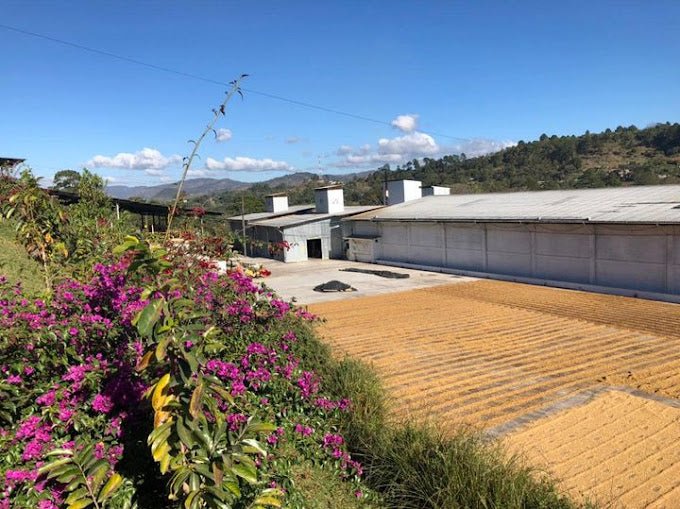
Ceiba is a coffee from Honduras grown in Marcala, in the department of La Paz, by several producers working with COMSA, the Café Orgánico Marcala cooperative. Grown through organic farming, this lot brings together several varieties cultivated between 1200 and 1700 meters above sea level.
The name Ceiba refers to an emblematic Central American tree, long regarded as sacred. It suits this coffee well: rooted in its territory, collective in origin, and carried by a cooperative whose work goes far beyond coffee production alone.
Cup profile
In the cup, Ceiba is approachable and structured, with a base of caramel and milk chocolate, followed by notes of dried fruits. A brighter lemon-like note brings length and keeps the profile from feeling heavy.
The result is a smooth, readable and balanced cup, with roundness, comfort and just enough lift to retain tension.
Roast approach
We roasted this coffee as a clean and comforting profile, aiming to preserve its natural sweetness, texture and subtle citrus lift on the finish.
COMSA and Marcala
Ceiba is not the coffee of a single farm, but the result of several producers in Marcala working together through COMSA. Founded in 2001 during a deep coffee crisis, the cooperative was built around a simple idea: give producers back the technical, economic and educational tools needed to better understand their coffee and better value their work.
Today, COMSA brings together more than 1200 producers. Its approach is based on organic farming, training, economic transparency and a strong collective commitment to education.
Marcala is one of the best-known coffee terroirs in Honduras. This coffee therefore tells not only a cup story, but also a story about how people produce, organize and invest together in the future.
Technical information
- Origin: Honduras
- Region: La Paz
- Terroir: Marcala
- Cooperative: COMSA (Café Orgánico Marcala)
- Varieties: Parainema, Lempira, Icatu, Red Catuai
- Process: Honey
- Harvest: Hand-picked, from December to March
- Drying: 20 days on patios
- Altitude: 1200 to 1700 m
Share